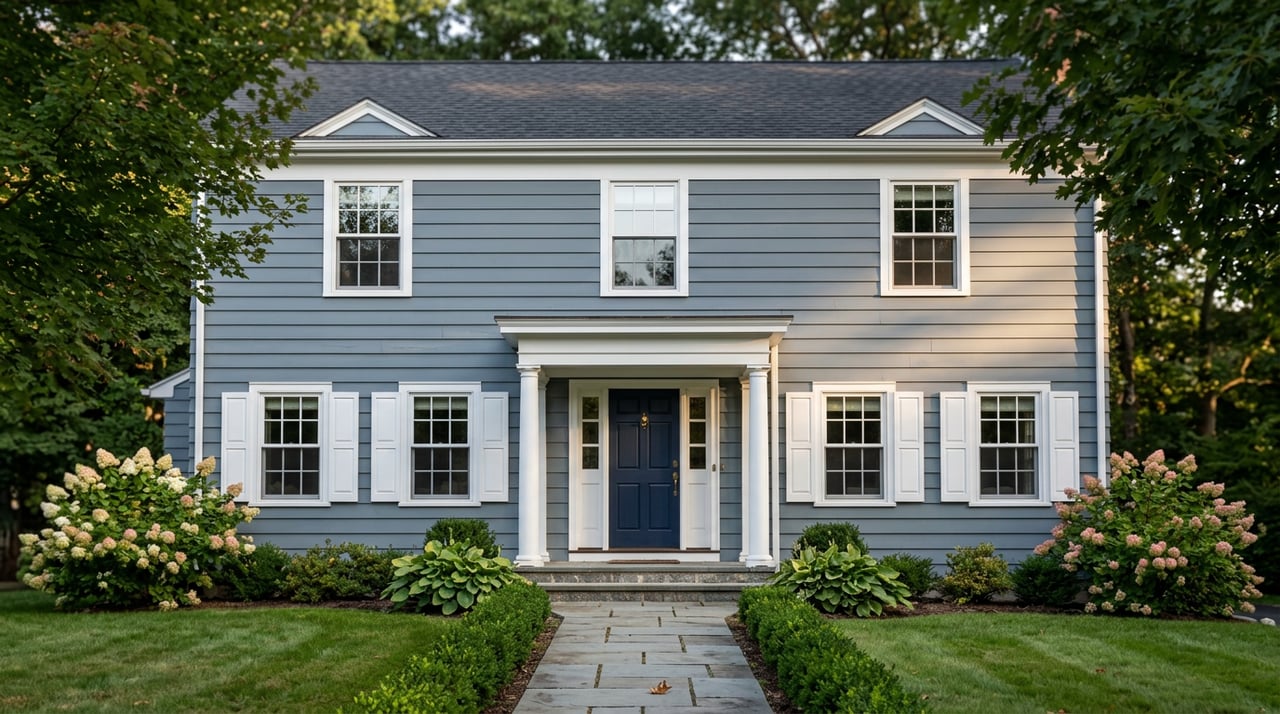
Waltham Residential Exemption: The Tax Timing Buyers Miss
August 6, 2026
August 6, 2026
Every Waltham offer sheet I review contains the same quiet mistake. Buyers look at the property tax figure printed on the listing, plug it into their carrying cost worksheet, and shop the next house. The number they used belongs to the seller, not to them, and the gap between the two can run more than three thousand dollars a year for as long as eighteen months after closing.
The mechanism is the city's residential exemption, and it does not follow the house. It follows the person who lived there on a specific January morning.
Waltham is one of a small group of Massachusetts municipalities that shifts a portion of the property tax burden off owner occupants. For fiscal year 2026 the city set the residential rate at $10.32 per $1,000 of assessed value and the residential exemption at $317,643 deducted from the assessed value of every qualifying owner-occupied home before the rate is applied. The arithmetic is simple and consequential: the exemption itself is worth $3,278.07 in tax savings each year the owner qualifies.
That is not a rounding error on an $894,500 single-family purchase, which is where the citywide median landed in the twelve months ending Q2 2026 per MLS PIN sold data. It is close to a full mortgage payment, every year, forever.
Here is the split most buyers do not see until the third quarter actual bill arrives in the mail.
| FY2026 scenario | Assessed value used | Tax rate | Annual bill |
|---|---|---|---|
| Owner-occupant, exemption on file | Assessed − $317,643 | $10.32 / $1,000 | About $4,895 on the average single-family home |
| New buyer, exemption not yet earned | Full assessed value | $10.32 / $1,000 | Roughly $3,278 higher |
| Non owner-occupant, investor, second home | Full assessed value | $10.32 / $1,000 | Roughly $3,278 higher, indefinitely |
The seller's carrying cost, printed on the MLS sheet, is line one. The buyer's carrying cost, for at least the first fiscal year of ownership, is almost always line two.
The eligibility test is not "did you buy the house." It is "did you own the house and live in it as your principal residence as of January 1 preceding the fiscal year." Massachusetts fiscal years run July 1 through June 30, so the January 1, 2025 status determined the FY2026 bill that landed this past year, and the January 1, 2026 status determines the FY2027 bill that will arrive in the third quarter of this fiscal year. The city spells this out on its assessor FAQ, and the annual filing deadline is April 1.
That single sentence reorganizes the math of when to close.
A buyer who closes on a Warrendale colonial on November 15, 2026 does not own or occupy the property as of January 1, 2026. They will not qualify for the FY2027 residential exemption. Their earliest exemption applies to FY2028, on a bill they will not see until the third quarter of that fiscal year, roughly spring 2028. That is close to eighteen months of paying the un-exempt rate, on top of the seller's exempt figure they used to underwrite the deal.
Now shift the same closing to December 20, 2025. Same house, same price, same rate. The buyer owns and occupies as of January 1, 2026, files the residential exemption form by April 1, and the exemption drops onto the third quarter actual bill in early 2027. The two closings, five weeks apart, produce a spread of roughly $3,278 in year-one real carrying cost.
Nothing in the standard Massachusetts offer form calls this out. It is the kind of local friction that only appears if someone tells you it is there.
Waltham listings pull the seller's most recent actual tax figure into the MLS. When the seller is an owner-occupant who has been claiming the residential exemption for years, that number quietly bakes in the $317,643 reduction. When the seller is an estate, an investor, or a recent buyer who has not yet earned the exemption, the number reflects the full assessed value.
The line item looks identical in both cases. It is worth reading with a few questions in mind:
The Waltham Assessors Department at 781-314-3200 will confirm, parcel by parcel, whether the residential exemption is currently on the account. That call takes about four minutes and it is the single highest-leverage piece of due diligence a Waltham buyer can do before writing.
Waltham is not built like Lexington or Concord. A Waltham Public Library planning document using 2021 Census data reported that 55.5% of residential structures carry two or more units, concentrated across South Waltham, Warrendale, Cedarwood, and the streets radiating out from Banks Square and the Moody Street corridor. That housing mix matters here because the residential exemption is not limited to detached single-family homes. The city extends it to owner-occupied residential properties up to a three-family, as long as the owner uses one of the units as their principal residence.
For a buyer weighing a two-family within walking distance of the Waltham/Central Square or Brandeis/Roberts commuter rail stops on the Fitchburg Line, the exemption does not shrink because the building holds a rental unit. It applies to the full parcel's assessed value, and the January 1 clock runs identically. A house-hacking buyer who closes in Q4 loses the same fiscal year the single-family buyer loses.
The friction is real, but every piece of it is knowable in advance. Before submitting an offer on a Waltham property, work through this sequence:
Buyers moving from Boston, Cambridge, Brookline, or Somerville know the shape of a residential exemption from their prior city. Buyers relocating from elsewhere in the country almost never do. The Redfin data for the three months ending May 2026 shows Waltham homes selling around 1% above list on a 23-day median, which means an out-of-town buyer often has less than a week to catch this before writing. That is the window most agents miss.
If I close in March, do I qualify for the exemption on the FY2026 bill I already inherited from the seller? No. The FY2026 test was ownership and principal-residence occupancy as of January 1, 2025. A March 2026 closing puts your first opportunity at FY2028, contingent on January 1, 2027 ownership and occupancy.
Does the seller's existing exemption transfer to me at closing? It does not. The exemption attaches to the qualifying owner, not the parcel. When title changes hands, the account reverts to the full assessed value until a new qualifying owner files.
What happens if I miss the April 1 application deadline? The exemption is not applied for that fiscal year, even if you otherwise qualify. Per the city's assessor guidance, approved applications produce a credit on the fourth quarter bill or a refund. Missed applications do neither.
Can my LLC or trust claim it? An LLC generally cannot. A trust can, but only if a copy of the trust document is on file with the assessor and the beneficial owner uses the property as their principal residence for income tax purposes.
How does this compare to Lexington, Concord, or Acton? Those towns do not offer a residential exemption. The line-item comparison of a Waltham single-family against a Lexington or Concord single-family looks different once this $3,278 annual lever is on the table, and it looks different again in year one when the new buyer has not yet earned it.
Waltham rewards buyers who read the fine print, and it punishes buyers who trust the printed number. If you are weighing a Waltham purchase this fall, or preparing to list a home where the residential exemption has been quietly protecting your bottom line, a short conversation before the offer is written can be worth thousands of dollars a year, every year you own the home. Suzie Winchester has spent decades walking buyers and sellers through exactly this kind of local machinery. Call or text Suzie for a personal market consultation.
Stay up to date on the latest real estate trends.
Get assistance in determining current property value, crafting a competitive offer, writing and negotiating a contract, and much more. Contact me today.